The Enquiry Desk Compact: Running a Shared Inbox With Clear Ownership and Calm Handovers
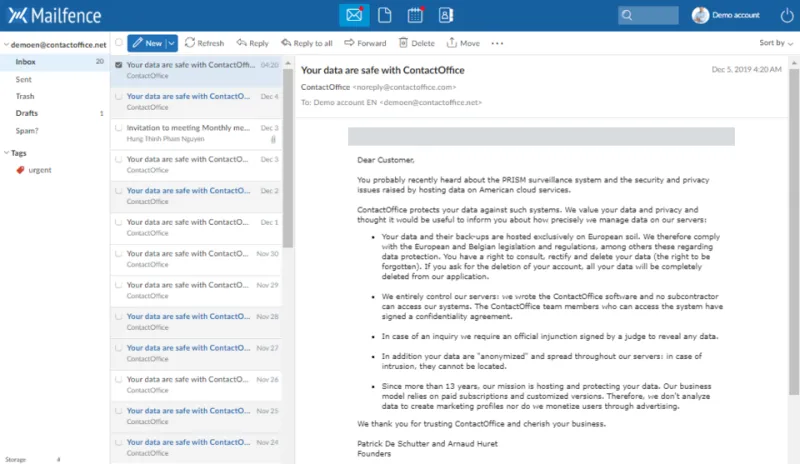
Photo: PNHTHINH, CC BY-SA 4.0, via Wikimedia Commons
An info@ address is a useful front door. It is also, in many small UK firms, the place where enquiries go to wait. The problem is rarely the inbox itself. It is the absence of agreed rules about who reads a message, who replies, where it is recorded and when it can be closed. Without those rules, a shared inbox becomes a black hole with a polite name.
A shared inbox charter need not be elaborate. It should fit on one page, be visible to everyone who uses the address, and answer a small number of practical questions. At Fylde VA, the useful test is simple: could a competent virtual assistant sort the inbox for a day without asking for permission at every turn? If not, the charter is not yet clear enough.
Why a shared inbox needs a compact, not just a rota
A rota tells people when they are watching the inbox. A compact tells them what to do when they are. The distinction matters. Many small firms have a rota in name only: everyone checks the inbox, so no one owns it. Messages are read, then left unread again. A client receives a reply from one person, then a second reply from another. A quote request is forwarded to a colleague without a note, and the trail goes cold.
The charter should be treated as a working agreement rather than a policy document. It should be reviewed when the team changes, when enquiry volumes shift, or when a recurring problem emerges. It should also distinguish between the routine and the exceptional. Routine sorting should not need a director’s approval. Exceptions should be escalated quickly and without apology.
Who owns the desk
Name a triage owner. This is the person responsible for the first pass through the inbox during agreed hours. In a small firm, that may be an office administrator, a partner, or a virtual assistant working to a set brief. Name a deputy for leave and busy periods. The point is not to create hierarchy; it is to prevent the shrug that comes when everyone assumes someone else has looked.
The triage owner does not need to answer every message. Their job is to decide what kind of message it is and where it should go. They may reply directly where the charter allows, acknowledge and route where a specialist is needed, or close obvious spam and duplicates. Subject owners then take responsibility for their areas, such as accounts, operations or client work.
Acknowledgement: the first promise
Every shared inbox needs a stated acknowledgement standard. For many small UK firms, a reasonable standard is acknowledgement by the end of the next working day. Genuine emergencies may need same-day attention, but the charter should define what counts as urgent rather than leaving it to instinct. A complaint, a legal notice, a payment change request or a safety issue may warrant immediate escalation. A routine quotation request usually does not.
Acknowledgement is not the same as a full answer. A short holding reply is often enough: confirm receipt, state when the client can expect a fuller response, and give a named contact if possible. This reduces the pressure to solve everything on first reading and gives the team time to gather facts. It also protects the client from silence, which is usually interpreted as neglect.
Handoffs: log the move, not just the message
A handoff is where shared inboxes commonly fail. A message is forwarded to a colleague with the words ‘can you look at this?’ and disappears from view. The original sender receives nothing. The colleague assumes someone else has replied. The triage owner assumes the matter is closed.
The remedy is a simple handoff log. It can live in a shared spreadsheet, a task board or a lightweight project tool. It should record the date received, the sender, the subject, the owner, the action required and the due date. If a message is forwarded, the log is updated. If a colleague replies directly, the log is updated. The inbox is not the record; the log is the record.
For a virtual assistant, the charter should grant clear authority to acknowledge messages, request missing information using an approved template, route enquiries to named owners, and close spam and duplicates. Escalation should be reserved for exceptions: complaints, legal correspondence, press enquiries, payment changes, or anything that falls outside the agreed thresholds.
When a message leaves the inbox
A message should leave the inbox when it has been dealt with, not when it has merely been read. There are four normal exits. First, it is answered and archived. Second, it is delegated with a named owner and a due date. Third, it is converted into a task, quotation or case record. Fourth, it is closed as no action, spam or duplicate.
The charter should say which of these exits is appropriate and where the record is kept. The inbox is a sorting station, not a storeroom. Messages that remain in the inbox indefinitely create a false sense of work in progress. A weekly check should confirm that nothing has been left unassigned and that the handoff log matches the inbox.
The one-page charter template
Use the following headings as a starting point. Keep the answers short enough to be read in a few minutes.
- Charter for: [business name] shared inbox at [address].
- Triage owner and deputy: [names and cover arrangements].
- Working hours for triage: [days and times].
- Acknowledgement standard: [for example, by the end of the next working day].
- Routing rules: [enquiry type to named owner].
- Handoff log location: [file, board or tool].
- Authority granted to triage owner: [acknowledge, request information, route, close spam and duplicates].
- Escalation triggers: [complaints, legal notices, press, payment changes, safety issues].
- Closure rule: [where answered and delegated messages are recorded].
- Review date: [monthly or quarterly].
A daily sorting routine for a virtual assistant
A short routine is more reliable than a long one. In the morning, allow around twenty minutes to clear overnight messages. Read each message once, apply the routing rules, send acknowledgements where required, and update the handoff log. Do not attempt to solve specialist queries that belong to someone else. In the middle of the day, allow ten minutes for a check: new messages, overdue handoffs, and anything that has arrived after the morning pass. At the end of the day, allow fifteen minutes to ensure that no message is unassigned, that the log is current, and that tomorrow’s priorities are visible.
Once a week, review the inbox against the handoff log. Look for messages that have been read but not actioned, handoffs without a due date, and recurring enquiry types that could be handled with a template or a clearer web form. Report exceptions rather than every routine decision. The charter exists so that the routine can be repeated calmly, not so that every message becomes a committee meeting.
Keeping the compact honest
A charter is only useful if it changes behaviour. Review it monthly for the first quarter, then at a sensible interval. Consider enquiry volumes, acknowledgement times, the number of overdue handoffs and the most common routing problems. Adjust the rules rather than blaming the inbox. Retain messages in line with the firm’s retention policy, and keep personal data out of private mailboxes where a shared record is required.
A shared inbox does not need to be a black hole. With a named owner, a clear acknowledgement standard, a simple handoff log and a short daily routine, it can become what it was meant to be: a dependable front door for the business.